The decade NVIDIA became the computer
The numbers do not describe a gaming company that stumbled into AI. They describe a computing platform whose strategy showed up years before the income statement caught up.
The strategy arrived before the P&L.
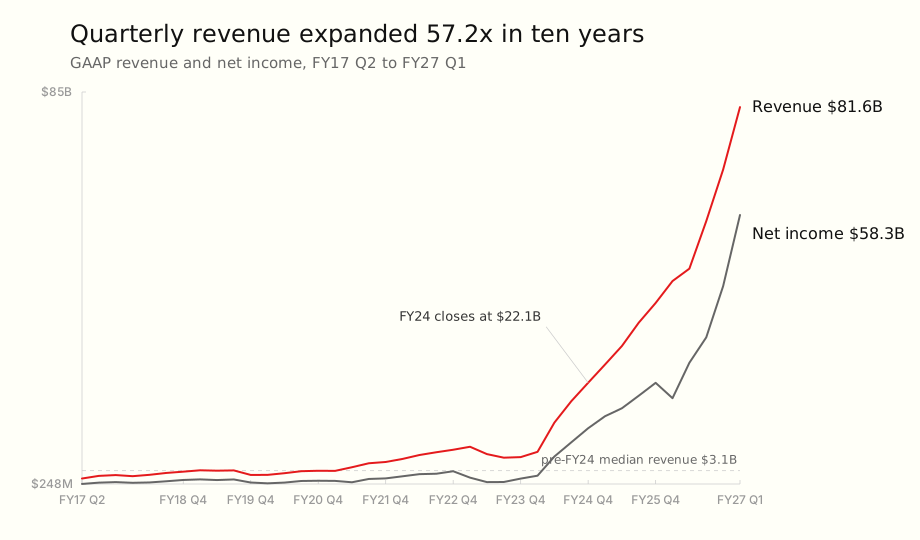
In FY17 Q2, NVIDIA generated $1.4B of quarterly revenue. Management was already putting gaming, computer vision, GPU computing, and AI in the same strategic frame, but the financials still looked like a powerful graphics franchise with optionality attached.
That optionality stayed quiet for years. Before FY24, median quarterly revenue was $3.1B. The strategic language was ahead of the P&L; the platform was being built before the mass-market urgency existed.
Generative AI turned the platform into infrastructure.
The decisive break came when management stopped describing a faster chip cycle and started describing an industry transition from general-purpose computing to accelerated computing. FY24 Q2 revenue reached $13.5B, up 101% year over year. By FY24 Q4, revenue was $22.1B, up 265% year over year.
The shape matters: this is not smooth compounding. It is a long platform build followed by a step-change in demand.
The model changed more than revenue changed.
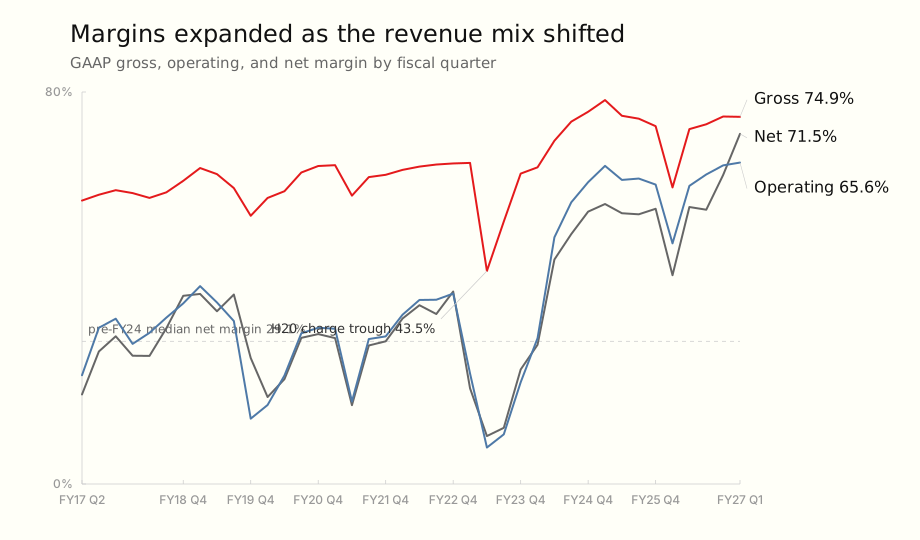
Scale alone does not explain NVIDIA's earnings power. The financial model changed. Pre-FY24, operating expenses consumed a median 32.8% of revenue. In FY27 Q1, they consumed 9.3%.
That operating leverage is why $58.3B of FY27 Q1 net income exceeded revenue in 38 of the prior 39 quarters. The income statement became a different machine.
Infrastructure-critical, still asset-light.
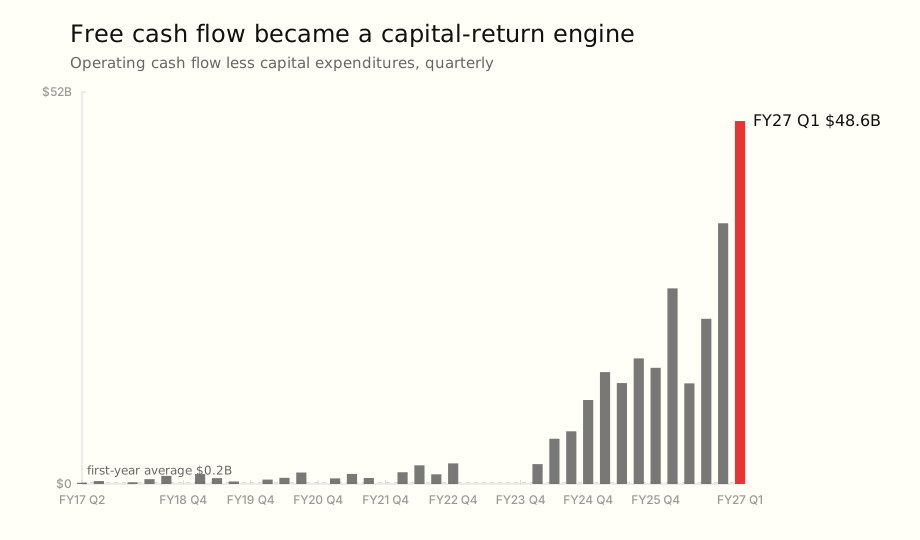
NVIDIA became central to the global AI buildout without becoming a capital-heavy infrastructure owner. The latest four quarters produced $253.5B of revenue and $119.1B of free cash flow. Capital expenditures were only 2.6% of revenue.
The burden of physical scale sits with foundries, memory suppliers, cloud customers, sovereign buyers, and data-center operators. NVIDIA captures platform economics while the ecosystem funds much of the buildout.
The old scale is now the baseline.
The most compact way to see the transformation is to compare one current profit number with the old revenue distribution. FY27 Q1 net income alone was larger than almost every prior quarter's total revenue.
That is the story hidden inside the headline growth rate: NVIDIA's profit scale has overtaken its old company scale.
The red marker is current profit; the gray ticks are prior quarterly revenue. It sits beyond 38 of 39 old revenue quarters.
A decade ago, AI was a management theme. In FY27 Q1, it was $58.3B of net income.
The investor question has shifted.
Five years ago, the question was whether Data Center could become bigger and more durable than Gaming. That question has been answered. The new question is how long NVIDIA can preserve system-level scarcity and margins while customers, ASIC vendors, networking competitors, sovereign buyers, and export controls all adapt.
| What the data says | What the narrative tests next |
|---|---|
| Revenue and margins moved together. | Can system-level scarcity persist as buyers optimize for cost and supply? |
| Free cash flow scaled faster than capital intensity. | Can ecosystem partners keep funding the physical AI buildout? |
| Buybacks exceeded R&D by 3.1x in FY27 Q1. | Can NVIDIA keep funding product cadence, software, and returns without slowing strategic investment? |
| Export controls already moved revenue, inventory, and outlook. | Does geopolitics become a recurring product-roadmap constraint? |
Sources and method
Data: Local dataset built from NVIDIA 10-Q/10-K XBRL facts, data/processed/nvda_quarterly_financials.csv, plus SQL findings in analysis/sql_insights.md.
Management narrative sources: